IMAGING FOR XR 2025
Invited Talks / Panel Discussion / Social Gatherings
8:00–16:00 CA / 11:00–19:00 NY / 17:00–02:00 EU
On this page
ABOUT
Welcome to Imaging for XR 2025!
Imaging for XR is a one-day workshop on virtual, augmented, and mixed reality technologies that enhance and blend the digital and the physical worlds.
This year, we focus on mixed reality, also called digital passthrough or video passthrough. We bring together researchers to share the latest on how to create a 3D scene that seamlessly blends video captures of the real world with virtual content. We also host a discussion panel of artists and designers who work with mixed reality, intended to spark a conversation on the limits of current technology and to identify opportunities for new directions.
Imaging for XR 2025 will take place online, on Friday, November 14, 2025, from 8:00 – 16:00 CA / 11:00 – 19:00 NY / 17:00 pm – 1:00 Paris. Early bird pricing available until October 14, 2025. Student pricing and classroom pricing available. See registration page for details.
PROGRAM
Friday 14 November
8:00–8:10 CA / 11:00–11:10 NY / 17:00 –17:10 EU
Welcome and Introduction
Workshop Introduction: Bennett Wilburn, display NTI architect project Starline, Google, (US), Imaging for XR 2025 General Chair
8:10–9:10 CA / 11:10–12:10 NY / 17:10 –18:10 EU
SESSION I
Session Chair: Minjung Kim, independent research scientist, (Canada), Imaging for XR 2025 Program Chair
8:10 CA / 11:10 NY / 17:10 EU

 Passthrough Photon to Photon (P2P) Latency, Visual Comfort, & Task Performance
,
Lizzie Hubbard, senior UX researcher, (US) and
Fabian Langguth, software engineer, Meta, (Switzerland)
Passthrough is a feature on Meta Quest headsets that allows you to step outside your immersive view to see a real-time view of your surroundings. The purpose of our research is to identify the relationship (or non-relationship) between photon-to-photon latency and perceptual, behavioral, and attitudinal outcomes, and to identify the point of diminishing returns (if one exists) for key outcomes with improved photon-to-photon latency. Join us to explore how we systematically varied latency and measured its effects on user perception, visual artifact disruption, and task performance among people who are susceptible to motion sickness.
 A Framework for Dissecting Perceptual Issues in Video Passthrough
,
Stan Jin, imaging scientist, ByteDance Ltd., PICO XR, (US)
This work introduces a framework for dissecting perceptual issues in video passthrough by categorizing visual perceptual metrics into key dimensions: geometry, texture, and shading. Uniformity properties within each dimension—such as spatial and temporal uniformity—are also examined. Using this framework, the entire imaging chain, from camera to display, can be systematically analyzed to identify factors affecting visual fidelity. This structured approach enables comprehensive evaluation of visual quality challenges in video passthrough and provides a foundation for developing passthrough systems with high visual fidelity.
9:10–9:40 CA / 12:10–12:40 NY / 18:10–18:40 EU
SESSION BREAK IN 2D VIRTUAL SPACE
9:40 - 9:50
IS&T INTRODUCTION
IS&T Introduction: Jonathan B. Phillips, executive director, IS&T, (US)
9:50–10:50 CA / 12:50–13:50 NY / 18:50 –19:50 EU
SESSION II
Session Chair: Nicolas Bonnier, Apple, (US), Imaging for XR 2025 Program Chair
9:50 CA / 12:50 NY / 18:50 EU
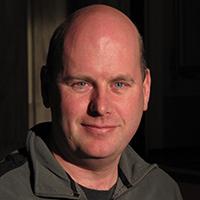 Binocular Calibration in Passthrough VR
,
Robert Allison, professor, Centre for Vision Research, York University, (Canada)
Most models for virtual reality rendering assume coincidence of, and congruence between, the vantage point of the user’s eye in the virtual scene, the visual field, and the rendering camera. To achieve this requires calibration of the VR cameras to match the field of view of the display at the eye, the interocular separation, and the location of the eyes relative to the head. In passthrough VR, these cannot physically match as the centres of the capture cameras are necessarily offset from the eyes and hence the rendering cameras. Furthermore, users differ in their anatomy, necessitating individual calibration. Here we report on recent and ongoing psychophysical and user comfort studies that can inform designers of the requirements for, and consequences of, binocular XR calibration and alignment.
10:20 CA / 13:20 NY / 19:20 EU
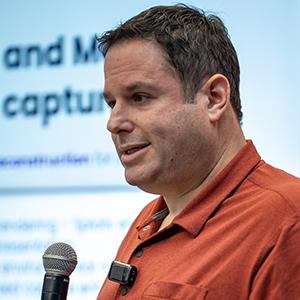 Reconstructing and Localizing the World: Real-Time Imaging Advances in XR
,
Ken Wolfe, director of engineering, Niantic Spatial, (US)
Real-time imaging is at the core of immersive XR experiences. In this talk, Ken Wolfe introduces how Niantic’s Spatial SDK leverages advanced camera systems and AI/ML-assisted image processing to reconstruct and localize the world with centimeter accuracy across devices, from mobile to headsets. He highlights advances in AI-driven depth sensing, occlusion handling, and semantic understanding that enable precise and adaptive XR experiences. The session also explores imaging challenges across platforms, scalability from small objects to large environments, and how these capabilities open the door for next-generation telepresence, training, and enterprise applications.
10:50–11:20 CA / 13:50–14:20 NY / 19:50 –20:20 EU
SESSION BREAK IN 2D VIRTUAL SPACE
11:20–12:30 CA / 14:20–15:30 NY / 20:20 –21:30 EU
MEAL BREAK
12:30–14:00 CA / 15:30–17:00 NY / 21:30 –23:00 EU
SESSION III
Session Chair: Bennett Wilburn, Google, (US) Imaging for XR 2025 General Chair
12:30 CA / 15:30 NY / 21:30 EU
 Real-time Interactive 6-DoF Free-viewpoint Video Streaming of 4D Gaussian Splatting for XR
,
Jonghyun Kim, senior research scientist, NVIDIA, (US)
We present a real-time interactive streaming system for 6-DoF free-viewpoint video (FVV) based on 4D Gaussian Splatting (4DGS), enabling immersive XR experiences on both light field (LF) and virtual reality (VR) displays. Our approach combines QUEEN, a high-performance 4DGS compression and streaming framework, with G2LF, an efficient multi-view renderer optimized for XR. QUEEN reconstructs 4DGS representations from multi-view video by modeling per-frame residuals as compact Gaussian attributes, achieving high compression while maintaining photorealistic quality. The compressed 4DGS packets are streamed to clients, where G2LF leverages single-pass plane sweeping and swizzle-based rasterization to synthesize 45+ views at over 200 FPS. This enables users to dynamically adjust viewpoint, focus, and timestamp in real time while ensuring temporal and angular consistency.
13:00 CA / 16:00 NY / 22:00 EU
 Video Passthrough for Android XR
,
Konstantine Tsotsos, sr. staff engineer and manager, Google Android XR, (US)
From photons in to photons out, how do we make video passthrough compelling, comfortable, and believable for headset users? In this talk, we discuss the Android XR Passthrough pipeline, how we think about user-visible tradeoffs, and some of our latest work in perception, image processing, graphics, and user comfort understanding.
13:30 CA / 16:30 NY / 22:30 EU

 Practical Challenges Towards Comfortable and Realistic Image Quality in Video Passthrough
,
Won-Joon Do, staff engineer, (South Korea) and
Dongheon Yoo, XR software engineer, Samsung Electronics, (South Korea)
Mixed reality (MR) has gained significant traction in spatial computing, where video passthrough serves as a cornerstone technology for immersive experiences by replicating natural outdoor vision. To achieve optimal immersion, video passthrough must deliver perceptually realistic and geometrically aligned imagery with minimal latency and power consumption. While challenges such as geometric alignment and latency are essential, this talk focuses specifically on overcoming image quality barriers to realism and comfort. Specifically, this talk delves into critical image quality challenges, including camera focus robustness and stability, stereo consistency for comfortable binocular convergence, artifact mitigation (flicker, motion blur, flare), and end-to-end color/brightness optimization from sensor to display. By tackling these challenges, we aim to elevate video passthrough experiences, enabling more seamless and immersive MR applications.
14:00–14:30 CA / 17:00–17:30 NY / 23:00–23:30 EU
SESSION BREAK IN 2D VIRTUAL SPACE
14:30–15:50 CA / 17:30–18:50 NY / 23:30–01:50 EU
SESSION IV
Panel with Introductions and Discussion
Session Chair: Susan Lakin, professor & director XR initiative, RIT, (US), Imaging for XR 2025 Program Chair
How are creators using video passthrough today, and what advances are needed to unlock its future? This panel brings together innovators from sports, education, gaming, and entertainment, along with storytellers applying mixed reality for social impact. They will share creative challenges and insights, sparking dialogue with technologists driving advances in MR. Join us to explore how breakthroughs in technology and creativity can shape the next generation of immersive media.
CONFIRMED PANELISTS


- Jenna Arndt, co-founder and head of fitness, Kinneta, (US)
- Dustin Kochensparger, co-founder, DB Creations, (US)
- Austin McCasland, staff product designer AI/AR/MR/VR (R&D), Meta Reality Labs, (US)
- Jimmy Vainstein, sr. program manager XR and interactive media, The World Bank, (US)
15:50–16:00+ CA / 18:50–19:00+ NY / 01:50–02:00+ EU
SESSION V
Concluding Remarks and Social 2D Virtual
To include a discussion of next year’s theme!