2025 Preliminary Program: Speakers and Schedule
Times subject to change.
NOTE: ALL TIMES are TOKYO local time.
Download Program 
FRIDAY 7 NOVEMBER
9:00 - 21:00
WELCOME AND OPENING REMARKS
9:00 – 9:10
9:05
Opening Remarks, Masahiko Fujii, SJ/Keio University (Japan)
ELECTROPHOTOGRAPHY AND METROLOGY
9:10 – 11:00
9:10
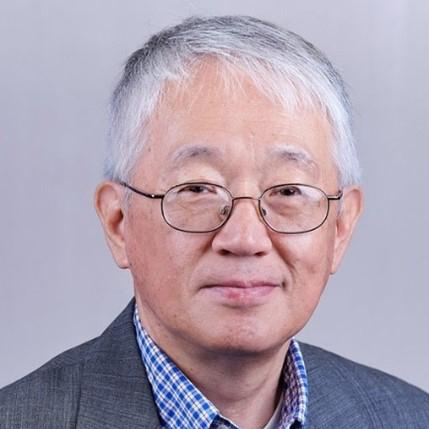 KEYNOTE: Reimagining Toner: Vibrant Effects, Greener Materials, and Smarter Manufacturing at Xerox, Chieh-Min Cheng, 2024 Recipient of the IS&T Chester F. Carlson Award; VP/Fellow, Polaroid (Taiwan); and former Fellow/Technology Manager, Xerox (US)
Abstract: At Xerox, toner innovation is being reimagined to meet the demands of a changing world – where visual impact, environmental responsibility, and manufacturing agility are equally critical. This presentation introduces a new generation of toner technologies built around three core pillars: vibrant specialty effects, sustainable material innovation, and intelligent manufacturing. Xerox’s specialty toners – including metallic, fluorescent, and clear options – offer print providers powerful tools for differentiation and creative expression. In parallel, bio-based resins derived from renewable sources are being incorporated to reduce carbon footprint without compromising performance. To support scalable production of these advanced materials, Xerox has implemented continuous emulsion aggregation (EA) processing, a cutting-edge approach that enables precise control, higher efficiency, and reduced energy usage compared to traditional batch methods. These synergistic advancements reflect Xerox’s commitment to pushing the boundaries of what toner can achieve – visually, sustainably, and operationally.
10:10
Contact and Non-contact Hybrid Static Elimination Technology to adapt High Resistance Media in Electrophotography, Koichiro Yuasa and Yutaka Kiuchi, FUJIFILM Business Innovation (Japan)
10:35
Effect of Paper Dust (Lint) and Evaluation of Paper Dust Release, Yosuke Tsukiyama, Niigata University (Japan)
11:00-11:15
Authors' Interviews and Break
NOVEL PRODUCTS AND SOLUTIONS (PRODUCT INTRODUCTION)
13:00 – 14:15
13:25
Utilization of Digital Microscopes in the Printing Industry (With Exhibit), Futa Kawagoe, HIROX (Japan)
13:50
Measurement Technologies Supporting Color Management in the Growing Industrial Printing Industry, Genta Koori, Konica Minolta (Japan)
14:15
Authors' Interviews and Break
LATEST INKJET TECHNOLOGY AND TRENDS I
14:30 – 15:45
14:30
TriPAV: A High-Frequency Rheometer for Precision Inkjet Characterisation and Waveform Optimisation (With Exhibit), Tri Tuladhar, Trijet Limited (UK)
14:55
Novel Additive Manufacturing Applications Enabled by Modular Integration of Ultra High Viscosity Technology, Ramon Borrell, Quantica GmbH (Germany)
15:20
Development of a Multi-Nozzle Hybrid Inkjet Printhead Enabling Droplet Ejection up to 200 cP Using Piezoelectric–Electrohydrodynamic Mechanism, Jaeyong Choi, ENJET (Republic of Korea)
15:45-16:00
Authors' Interviews and Break
AI-DRIVEN RESEARCH
16:00 – 17:45
16:00
Text-to-Image Generation AI Tools for 2.5D Prints: Preliminary Observations, Altynay Kadyrova, KIMEP University (Kazakhstan)
16:25
The Role of Nozzle Acoustic Sensing in Inkjet Printing, an Artificial Intelligence Perspective, Fernando Rodriguez-Llorente, University of Applied Sciences and Arts Western Switzerland (Switzerland)
16:50
Next-generation Intelligent Media Sensor System: Automating Operations and Enhancing Productivity through Paper Type Identification, Takahiro Tsujimoto, Konica Minolta (Japan)
17:15
 FOCAL: Exploring the Future Potential of Artificial Intelligence for Printing, Marius Pedersen, professor, Colour Imaging, Department of Computer Science, Norwegian University of Science and Technology (NTNU) (Norway)
Abstract: Artificial Intelligence (AI) is likely to impact the printing industry by introducing capabilities that extend far beyond current automation and optimization practices. Recent advances in machine learning and deep learning have enabled novel approaches to print quality inspection, defect detection, predictive maintenance, and process parameter optimization. We will first review relevant works that apply AI in diverse areas of printing, ranging from computer vision–based systems for real-time defect recognition to data-driven methods for process control in emerging technologies such as additive manufacturing printing. Building on this foundation, we will further explore the potential role of AI in shaping the future of printing. In particular, we emphasize the value of transferring and adapting methodologies from adjacent research fields. For example, techniques from computer vision can be leveraged for fine-grained analysis of print quality; natural language processing offers opportunities for document understanding, automated layout generation, and intelligent handling of printed text archives; robotics contributes to the integration of AI-guided manipulation in hybrid print-manufacturing environments; and generative design provides pathways for AI-driven innovation in printable structures, materials, and layouts. Through this interdisciplinary perspective, we aim to highlight how AI can support not only efficiency and reliability, but also creativity, adaptability, and new forms of value creation in the printing industry.
17:45-18:00
Authors' Interviews
RECEPTION (In-person only)
19:00 – 21:00